
Support Services
Products & Services
Delivery
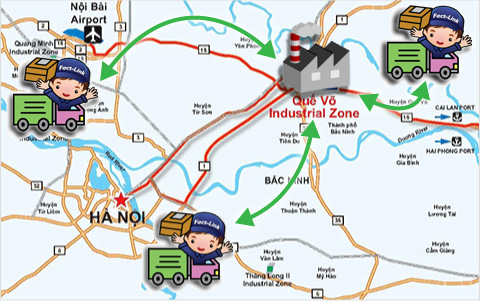
We have delivery trucks by route through industrial zones (Noi Bai, Thang Long, Pho Noi, Phuc Dien, Ha Nam, Vinh Phuc, ...) to ensure delivery of finished products after handling according to requirements. of cutomer. In addition, we also use express delivery service for small orders to save shipping costs for customers.
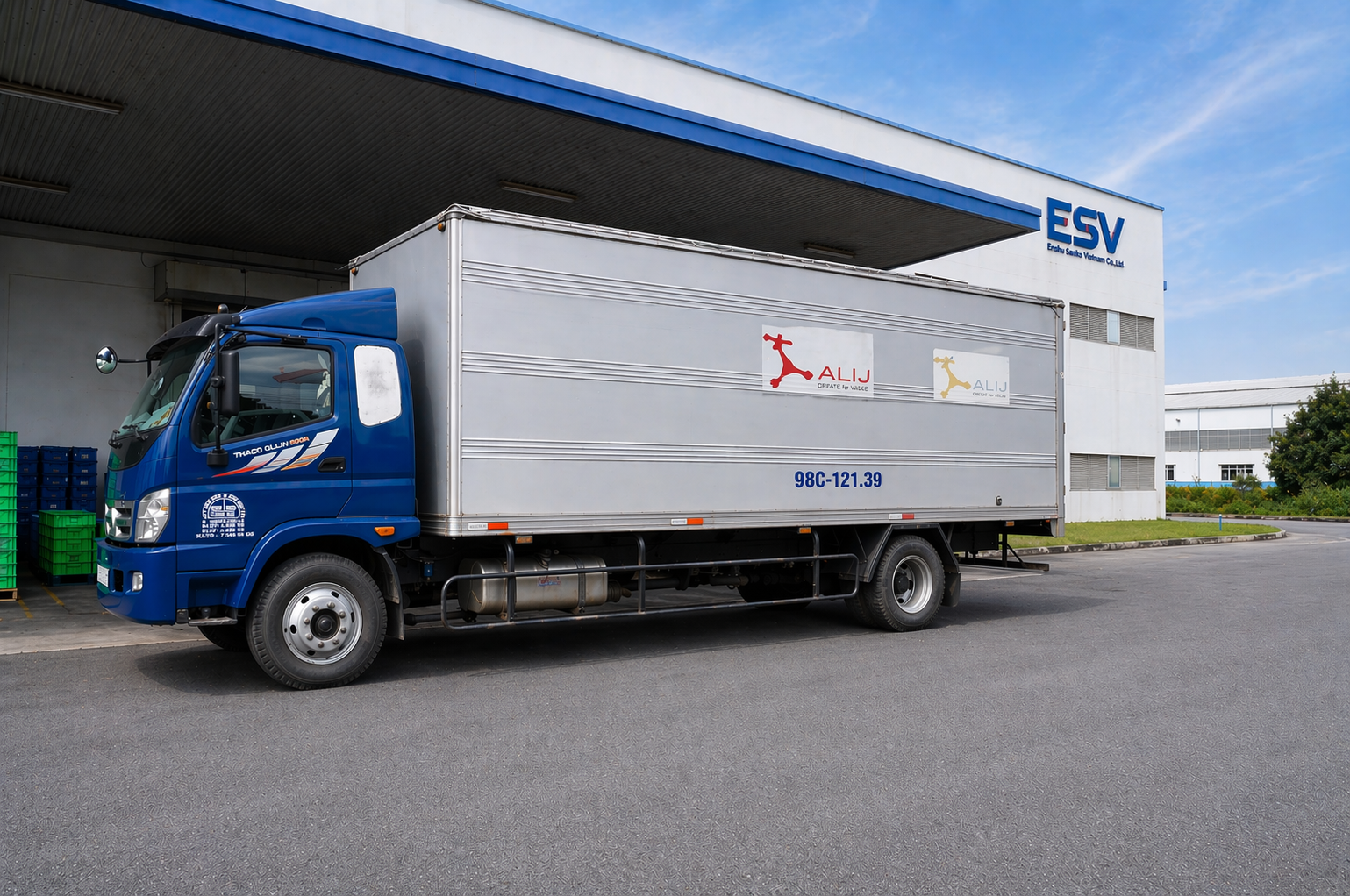
To ensure customers' goods are free of dust, rain, or damage, we use trucks with roofs or closed containers.
Customs
According to the provisions of Vietnam's customs law, for export processing enterprises, the outsourcer will carry out customs procedures. Therefore, we will take on those responsibilities. In addition, we also assist customers in preparing related documents and documents to shorten processing time.

Common questions
Why Is Baking Required After Plating?

Reply:
What Is Post-Plating Baking?
Post-plating baking, also known as Hydrogen Embrittlement Relief Baking, is a heat treatment process performed after electroplating to remove hydrogen that has penetrated the metal during surface treatment.
This process is particularly important for high-strength steel components, as absorbed hydrogen can cause hydrogen embrittlement, reducing the material's toughness and increasing the risk of cracking or unexpected failure during service.
In industries such as automotive, motorcycle manufacturing, aerospace, and precision engineering, post-plating baking is often not only recommended but also required by international standards and customer specifications.
Why Is Baking Required After Plating?
During electroplating processes such as electro zinc plating, electro nickel plating, cadmium plating, or even acid cleaning before plating, hydrogen atoms may be absorbed into the base metal.
If this hydrogen is not removed promptly, it can accumulate in areas of high stress, leading to:
- Reduced ductility
- Formation of microscopic cracks
- Sudden fracture during service
- Reduced product reliability and service life
One of the most critical aspects of hydrogen embrittlement is that failure does not always occur immediately after plating. Components may crack hours, days, or even weeks after being placed into service.
What Is Hydrogen Embrittlement?
Hydrogen Embrittlement (HE) is a phenomenon in which hydrogen diffuses into a metal, significantly reducing its load-bearing capability and making it brittle.
Affected components may:
- Fracture without noticeable deformation
- Crack around threads or sharp corners
- Fail under loads well below their intended design strength
Hydrogen embrittlement is considered one of the most serious failure mechanisms for high-strength steel components used in critical applications.
Which Components Require Baking?
Not every plated component requires post-plating baking.
Baking is generally recommended for:
- High-strength bolts
- Nuts
- Screws
- Pins
- Springs
- Gears
- Shafts
- Other highly stressed mechanical components
In general, steel parts with a hardness of approximately 39 HRC or higher (or an ultimate tensile strength of approximately 1,000 MPa or greater) are often specified for hydrogen embrittlement relief baking in accordance with customer requirements or international standards.
How Is Baking Performed?
After the plating process is completed, components are transferred to a controlled-temperature oven for a specified period.
Typical process parameters include:
| Parameter | Typical Value |
|---|---|
| Temperature | 190–230°C |
| Baking Time | 2–24 hours |
| Start Time | As soon as possible after plating, typically within 1–4 hours |
The exact baking conditions depend on:
- Base material
- Material hardness
- Plating type
- Customer specifications and applicable standards
Does Baking Affect the Plating?
When carried out correctly, post-plating baking does not significantly affect the coating thickness, appearance, or corrosion resistance of the plated surface.
Instead, it provides several important benefits:
- Improved product reliability
- Reduced risk of delayed cracking
- Compliance with international engineering standards
International Standards Related to Post-Plating Baking
Several international standards specify or recommend hydrogen embrittlement relief treatments, including:
- ASTM B633 – Standard Specification for Electrodeposited Coatings of Zinc on Iron and Steel
- ASTM B850 – Standard Guide for Post-Coating Treatments of Steel for Reducing the Risk of Hydrogen Embrittlement
- ISO 4042 – Fasteners – Electroplated Coatings
- ISO 9588 – Metallic and Other Inorganic Coatings – Post-Coating Treatments to Reduce the Risk of Hydrogen Embrittlement
In addition, many automotive manufacturers—including Toyota, Honda, Nissan, Ford, and General Motors—have their own technical requirements regarding post-plating baking for safety-critical components.
Factors That Influence Baking Effectiveness
To achieve effective hydrogen removal, several factors must be carefully controlled:
- Time between plating and baking
- Oven temperature
- Baking duration
- Temperature uniformity inside the oven
- Process monitoring and data recording
Proper process control allows hydrogen to diffuse out of the material before it can cause damage to the component.
When Is Baking Not Required?
Post-plating baking is generally not required for:
- Low-strength steel components
- Parts that are not subjected to significant mechanical stress
- Certain surface treatment processes with minimal hydrogen absorption risk, such as Electroless Nickel Plating in many applications
However, whether baking is required should always be determined based on the base material, mechanical properties, customer specifications, and applicable engineering standards.
Conclusion
Post-plating baking is a critical process for reducing the risk of hydrogen embrittlement, particularly in high-strength steel components.
By applying the correct baking temperature, duration, and timing, manufacturers can significantly improve product durability, reliability, and safety while meeting international quality standards.
For companies producing precision mechanical parts, automotive components, and industrial equipment, post-plating baking is far more than an optional process—it is an essential step in ensuring long-term product performance and customer confidence.
What Is Electro Zinc Plating? How Many Types Are There?
Reply:
What Is Electro Zinc Plating?
Electro Zinc Plating, also known as Zinc Electroplating, is a surface treatment process that uses an electric current to deposit a thin layer of zinc onto the surface of steel or iron components. This zinc coating acts as a protective barrier, preventing oxidation and corrosion while extending the service life of the base metal.
Due to its excellent corrosion resistance, attractive appearance, and cost-effectiveness, electro zinc plating has become one of the most widely used surface treatment technologies in modern manufacturing.
It is commonly applied in industries such as:
- Automotive
- Motorcycle manufacturing
- Precision engineering
- Electrical and electronic equipment
- Home appliances
- Construction
- Industrial machinery
How Does Electro Zinc Plating Work?
The electro zinc plating process is carried out in an electrolytic bath containing a zinc salt solution.
When direct current (DC) is applied:
- The workpiece serves as the cathode.
- The zinc electrode acts as the anode, or an insoluble anode is used together with a zinc-ion electrolyte.
- Zinc ions (Zn²⁺) migrate through the solution and are deposited evenly onto the surface of the workpiece, forming a protective zinc coating.
After plating, components are typically treated with Passivation (Chromate Conversion Coating) to further improve corrosion resistance and enhance the surface finish.
What Types of Electro Zinc Plating Are Available?
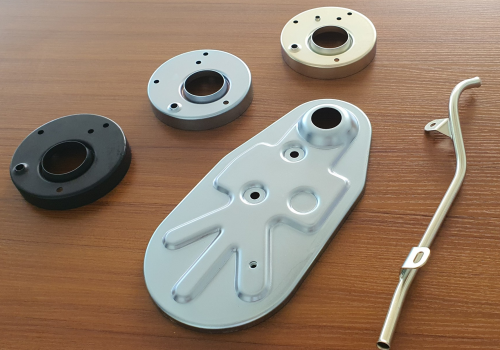
Electro zinc plating can be classified according to the post-treatment or passivation process. The most common types include:
1. Blue (Clear) Zinc Plating
Characteristics
- Bright blue-white appearance
- The most commonly used finish
- Cost-effective
- Suitable for a wide range of mechanical components
Typical Applications
- Bolts
- Nuts
- Brackets
- Stamped parts
- General mechanical components
2. Yellow Zinc Plating
Characteristics
- Yellow iridescent finish
- Better corrosion resistance than blue zinc plating
- Widely used in the automotive industry
Typical Applications
- Automotive components
- Industrial machinery parts
- Mechanical equipment
3. Black Zinc Plating
Characteristics
- Uniform black finish
- Excellent aesthetic appearance
- Suitable for decorative or identification purposes
- Can be combined with a Top Coat to improve corrosion resistance
Typical Applications
- Motorcycle components
- Electronic parts
- Furniture hardware
- Consumer products
4. Zinc Plating with Top Coat
For applications requiring enhanced corrosion resistance, an additional Top Coat is often applied.
A Top Coat provides several advantages:
- Improved Salt Spray Test performance
- Reduced friction during assembly
- Extended coating life
- Increased resistance to white rust and red rust
Comparison of Electro Zinc Plating Types
| Type | Appearance | Corrosion Resistance | Typical Applications |
|---|---|---|---|
| Blue Zinc Plating | Blue-white | Good | General mechanical components |
| Yellow Zinc Plating | Yellow iridescent | Very Good | Automotive and motorcycle parts |
| Black Zinc Plating | Black | Good | Decorative and aesthetic components |
| Zinc Plating with Top Coat | Various finishes | Excellent | Harsh service environments |
Advantages of Electro Zinc Plating
Compared with many other surface treatment methods, electro zinc plating offers several key benefits:
- Excellent corrosion protection
- Cost-effective solution
- Smooth and attractive appearance
- Suitable for high-volume production
- Can be applied to complex-shaped components
- Compatible with additional protective treatments such as passivation and top coats
Limitations of Electro Zinc Plating
Despite its many advantages, electro zinc plating also has certain limitations:
- The coating thickness is generally thinner than that of hot-dip galvanizing.
- It may not provide sufficient protection in highly corrosive environments without additional protective coatings.
- High-strength steel components require Hydrogen Embrittlement Relief Baking after plating to reduce the risk of hydrogen-induced cracking.
Electro Zinc Plating vs. Hot-Dip Galvanizing
| Feature | Electro Zinc Plating | Hot-Dip Galvanizing |
| Process | Electroplating | Immersion in molten zinc |
| Coating Thickness | 5–25 μm | 40–100 μm or more |
| Surface Finish | Smooth and bright | Rougher surface |
| Dimensional Accuracy | High | May affect dimensions |
| Corrosion Resistance | Good | Excellent |
| Typical Applications | Precision mechanical parts | Structural steel and outdoor applications |
Common Standards for Electro Zinc Plating
Several international standards are commonly specified for electro zinc plating:
- ASTM B633
- ISO 2081
- JIS H8610
- ASTM B117 (Salt Spray Testing)
- ISO 9227 (Salt Spray Testing)
The applicable standard depends on customer specifications, export market requirements, and the operating environment of the product.
Applications of Electro Zinc Plating
Because of its excellent balance of corrosion resistance, appearance, and cost, electro zinc plating is widely used for:
- Bolts, nuts, and screws
- Automotive components
- Motorcycle parts
- Electrical and electronic components
- Stamped metal parts
- Brackets and metal supports
- Furniture hardware
- Industrial machinery
- Precision mechanical components
Conclusion
Electro zinc plating is one of the most widely used surface treatment technologies thanks to its excellent corrosion resistance, attractive appearance, and cost-effectiveness.
Depending on product requirements and service conditions, manufacturers can choose Blue Zinc Plating, Yellow Zinc Plating, Black Zinc Plating, or combine zinc plating with a Top Coat to achieve the desired level of corrosion protection.
Selecting the appropriate plating process and international standard not only improves product durability but also helps manufacturers meet customer quality requirements and compete successfully in global markets.
What is ASTM B633?
Reply:
What is ASTM B633?
ASTM B633 is an international standard published by ASTM International that specifies the technical requirements for electrodeposited zinc coatings on iron and steel components. The primary purpose of this standard is to improve corrosion resistance, extend product service life, and ensure consistent coating quality.
ASTM B633 is widely adopted across various industries, including:
- Automotive
- Motorcycle manufacturing
- Electrical and electronics
- Precision machining
- Industrial equipment
- Components exported to Japan, the United States, and Europe
For many manufacturers, ASTM B633 is one of the key specifications when selecting a metal surface treatment supplier.
Purpose of ASTM B633
Electroplated zinc coatings in accordance with ASTM B633 provide several important benefits:
- Protect steel components from corrosion and oxidation.
- Extend the service life of metal parts.
- Improve surface appearance and finish.
- Provide an excellent base for painting or additional surface treatments.
- Meet customer quality and engineering requirements.
Applicable Materials
ASTM B633 primarily applies to:
- Carbon steel
- Alloy steel
- Cast iron
- Machined ferrous components
It is generally not intended for:
- Aluminum
- Copper and copper alloys
- Stainless steel (which typically requires different surface treatment standards)
Coating Thickness Classes
ASTM B633 defines several coating thickness classifications depending on the intended service environment.
| Service Condition | Minimum Zinc Coating Thickness |
|---|---|
| SC1 | 5 μm |
| SC2 | 8 μm |
| SC3 | 13 μm |
| SC4 | 25 μm |
SC1 (5 μm)
Recommended for indoor environments with minimal exposure to moisture.
SC2 (8 μm)
Commonly used for general industrial and mechanical components.
SC3 (13 μm)
Suitable for outdoor applications or environments requiring improved corrosion resistance.
SC4 (25 μm)
Designed for harsh operating conditions where maximum corrosion protection and long service life are required.
Chromate Conversion Coatings
After zinc plating, components are typically treated with a chromate conversion coating (passivation) to further enhance corrosion resistance.
Common passivation finishes include:
Clear (Blue) Passivation
- Blue or clear appearance
- Most commonly used
- Suitable for a wide range of industrial applications
Yellow Passivation
- Yellow iridescent finish
- Offers enhanced corrosion resistance
Black Passivation
- Black appearance
- Ideal for products requiring both corrosion protection and an attractive finish
Additional protective coatings such as Top Coat or Sealer may also be applied to further improve corrosion resistance and satisfy higher salt spray performance requirements.
Salt Spray Testing
One of the key performance requirements under ASTM B633 is corrosion resistance.
This is commonly evaluated using the Salt Spray Test in accordance with ASTM B117 or ISO 9227.
The corrosion resistance achieved depends on several factors:
- Zinc coating thickness
- Type of chromate conversion coating
- Whether an additional protective top coat is applied
In practical applications, customers often specify corrosion resistance ranging from 48 hours to more than 240 hours, depending on the product's intended service environment.
Hydrogen Embrittlement Relief
High-strength steel components are susceptible to hydrogen embrittlement during the electroplating process.
To reduce this risk, ASTM B633 recommends Hydrogen Embrittlement Relief Baking immediately after plating for high-hardness steel components.
This requirement is particularly important for:
- High-strength bolts
- Screws
- Springs
- Load-bearing mechanical components
Proper baking significantly reduces the risk of delayed cracking and improves long-term reliability.
ASTM B633 and RoHS Compliance
Modern ASTM B633 applications generally utilize Trivalent Chromium (Cr³⁺) Passivation, which complies with environmental regulations such as RoHS and REACH.
Compared with traditional Hexavalent Chromium (Cr⁶⁺) treatments, trivalent chromate technology offers a more environmentally friendly and safer solution while still providing excellent corrosion protection.
When Should ASTM B633 Be Specified?
ASTM B633 is recommended when products:
- Are manufactured from steel or cast iron.
- Require corrosion protection.
- Are exported to markets that require international quality standards.
- Are used in automotive, motorcycle, electronics, or precision engineering industries.
- Require strict quality control and consistent coating performance.
Conclusion
ASTM B633 is one of the world's most widely recognized standards for electroplated zinc coatings on steel and cast iron components. It establishes clear requirements for coating thickness, post-treatment processes, corrosion resistance, and quality verification.
Understanding ASTM B633 enables manufacturers to select the most appropriate surface treatment solution, improve product durability, and meet the increasingly stringent quality expectations of global customers.
What is MFZn8-③.H1.CF plating?
Reply:
M – Plating
F - Raw material is steel (Fe)
8- Min plating thickness 8µm
3 - Level 3 materials
H1- Baking for Hydrogen Embrittlement Relief
CF- White
What type of plating is MANi: 2–8 μm?
Reply:
M – Plating
A – Material: Aluminum or an aluminum alloy (Al)
Ni: 2~8 μm – Electro Nickel plating, plating thickness: 2~8 μm.
What is MBNi5 plating?
Reply:
M – Plating
B – Material: Copper or a copper alloy (Brass)
Ni5 – Electro Nickel plating, plating thickness: min5 μm.
What is MBSn (6±2μm) plating?
Reply:
M – Plating
B - Material: Copper and copper alloy
Sn (6±2μm) - Tin plating, plating thickness(6±2μm)
What is MASn(3~7) plating?
Reply:
M – Plating
A - Material: Aluminum (Al)
Sn(3~7) - Tin plating, plating thickness: 3~7 μm
What is Ep-Fe/Zn5B/CM2 Cr3+ plating?
Reply:
Ep - Electroplating
Fe - Raw material is steel (Fe)
Zn5 - Zinc plating, minimum plating thickness: 5 μm
CM2 - Yellow chromate
Cr3+ - Trivalent chromate
What does MFZn8-③.KF according to YAMAHA's plating standards mean?
Reply:
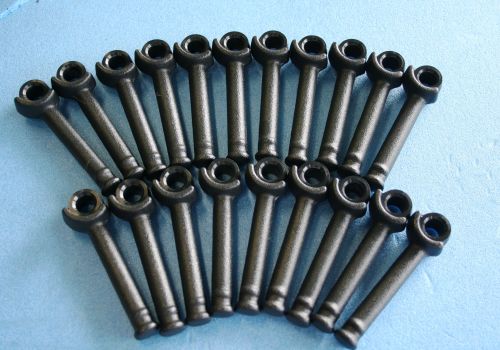
The symbol MFZn8-③.KF according to YAMAHA's plating standards has the following meaning:
M - Electroplating
F - Raw material is steel (Fe)
Zn - Zinc (electrolytic galvanized)
8- Min plating thickness 8µm
3 - Level 3 materials
KF - Black
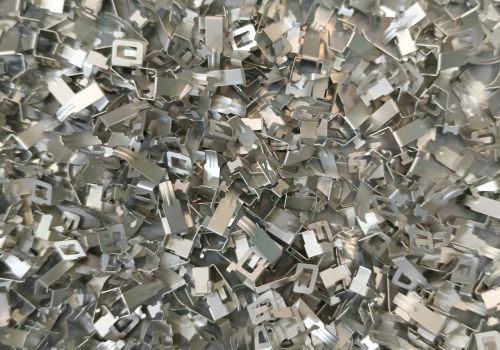
What is the plating symbol Ep-Cu/Ni1.Sn3?
Reply:
The symbol Ep-Cu/Ni1.Sn3 means plating with 2 layers of Nickel-tin and has the following detailed meaning:
Ep - Electroplating
Cu - Raw material is copper (Cu)
Ni 1 - Nickel plating, minimum plating thickness 1µm
Sn 3- Tin plated, minimum plating thickness 3µm
What is MFZn1S plating?
.JPG)
Reply:
The symbol MFZn1S has the following meaning:
M - Electroplating
F - Raw material is steel (Fe)
Zn - Zinc (electrolytic galvanized)
1S - White, minimum plating thickness 5µm
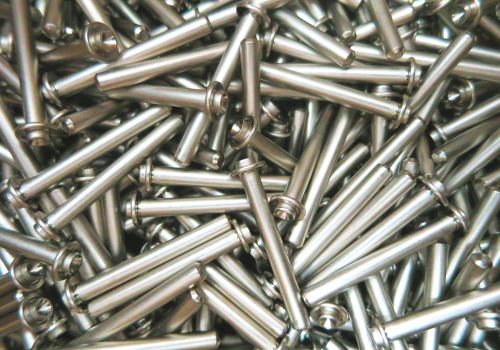
What is the symbol for electroless nickel plating in the new JIS standard?
Reply:
On drawings, the symbols for electroless nickel plating according to JIS standards are often seen as follows:
Elp-Fe/Ni(90)-P5
In there:
Elp: Symbol for Electroless plating (Electroless plating)
Fe: Product material that needs plating. Here is steel
Ni(90): Indicates that the Nickel content in the plating layer is 90%
P: Phosphorus (For electroless nickel plating, in addition to the main ingredient being Nickel, the plating layer also contains Phosphorus)
5: Minimum coating thickness, unit of measurement is micrometer (µm)
Contact Information
ENSHU SANKO VIETNAM CO., LTD
Address: Lot H4-2, Que Vo Industrial Park, Phuong Lieu Ward, Bac Ninh Province, Vietnam
Tel:
+ 84-222-395 2121
Email:
sales@esv.com .vn
Website: https://esv.com.vn